In today’s rapidly changing world, the question many parents are asking is no longer “Which school is best?” but rather, “What kind of education will truly prepare my child for life?”As global mobility increases and education pathways become more diverse, especially in international hubs like Singapore, early childhood education must evolve. It must move beyond traditional academics to nurture confident, adaptable and emotionally resilient individuals.
This is where the HEI and HEI Bridges model stands out, not just as an alternative, but as a forward-thinking approach that reflects the future of education.
A Finnish Foundation with Global Relevance
HEI Schools Singapore brings Finland’s globally respected early childhood education approach into a local context, offering children a thoughtful and holistic start. The HEI concept was developed in Finland in collaboration with the University of Helsinki, one of the world’s leading education research institutions and co-founded by Professor Lasse Lipponen, a recognised expert in early childhood education.
What began as a mission to share Finland’s successful, research-based pedagogy with the world has now grown into a global network. HEI Schools can be found across multiple countries, supporting educators in delivering high-quality, child-centred education grounded in Finnish principles.This global foundation makes HEI particularly relevant for internationally-minded families, offering consistency in philosophy, regardless of where life may take them.
Why This Matters Now — Especially in Singapore
Singapore is a unique educational landscape. Families here often navigate between local and international preschool systems. Singaporeans move on to local schools and expat families have a choice of international schools for primary education.In such an environment, early education cannot be narrowly focused. Children need to develop confidence to adapt to new environments, communication skills to engage across cultures, emotional resilience to manage change and a genuine love for learning that sustains them long-term.
The HEI approach responds directly to these needs. By balancing learning with wellbeing and supporting diverse learning styles, it prepares children not just for school but for a lifetime of transitions.This makes it especially timely for families seeking a more balanced, globally relevant education.
Rethinking School Readiness Through the HEI Preschool Programme
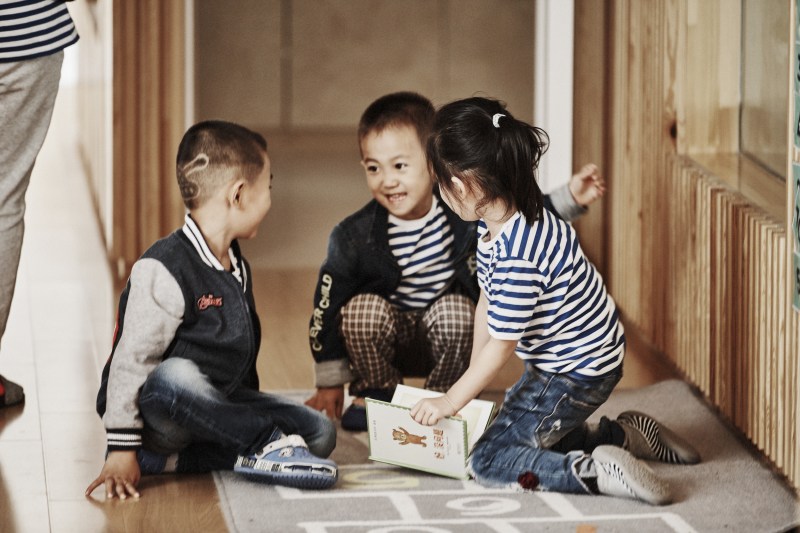
Traditional definitions of “school readiness” often focus on early academics — reading, writing, and numeracy. While important, these are only one part of the picture.The HEI Preschool Programme takes a broader and more meaningful view.Through play-based, inquiry-led learning, children are encouraged to explore, question and express themselves in a safe and nurturing environment where wellbeing is priority. Instead of being rushed into structured learning, they build strong foundational skills organically.Children develop confidence, independence, creativity, curiosity, collaboration, social awareness, and strong communication and thinking skills.
This approach ensures that children are not only prepared for the next stage of school but are equipped with the mindset to thrive in any system, whether local or international.
Inclusion as the Future: The Role of HEI Bridges
One of the defining features of future-ready education is inclusion where recognising that every child learns differently and deserves to be supported accordingly.HEI Bridges is a specialised programme designed for neurodivergent learners, and it reflects a fundamental shift in how education is delivered.Rather than expecting children to fit into a system, HEI Bridges adapts the environment to the child.
The programme provides individualised support based on each child’s strengths, with a strong focus on emotional regulation, social development, independence and communication skills, all within a safe and respectful environment. What makes HEI Bridges particularly unique is its emphasis on learning to co-exist from a young age. This reflects the Finnish philosophy of inclusion, where children grow up understanding diversity, building empathy and participating meaningfully in a community.
In a global society, these are not optional skills, they are essential.
The Finnish Advantage: Building a Foundation for Life
Finland’s education system is consistently recognised as one of the best in the world, not because of early academic intensity, but because of its emphasis on balance.It prioritises wellbeing as the foundation for learning, alongside play, creativity, and the development of intrinsic motivation. Equal importance is placed on emotional growth, independence, and critical thinking.This approach produces individuals who are not only academically capable, but also emotionally balanced, self-aware and resilient.
By adopting these principles, HEI Schools Singapore offers children a strong foundation, not just for exams, but for life.
A Future-Ready Pathway for Global Families
As the world becomes more interconnected, education must prepare children for uncertainty, change, and diversity.The HEI and HEI Bridges model does exactly that.Together, they offer a comprehensive and inclusive pathway that supports both neurotypical and neurodivergent learners, ensuring that every child is given the opportunity to thrive.
Whether children continue into Singapore’s local schools, international schools, or move across countries, they carry with them confidence, adaptability, and a lifelong love for learning.At HEI Schools Singapore, education is not only about preparing children for the next academic milestone, but about shaping individuals who are curious, capable and compassionate ready to navigate an increasingly complex and global world.
Early childhood is when children begin forming ideas about who they are as learners and how they relate to others. Research in developmental psychology tells us that these early experiences shape children’s beliefs about their own abilities and the people around them. During the preschool years, children are developing their sense of identity, confidence, and belonging within a group.
Young children are naturally curious and open to difference. This does not mean they fail to notice it. In fact, research shows that children as young as two are already consciously aware of physical differences such as height, weight and skin color. They are actively observing these differences while constructing their understanding of themselves and others. During these early years, children learn how to respond to difference, navigating how to include or exclude others and how to interpret their own strengths and challenges.
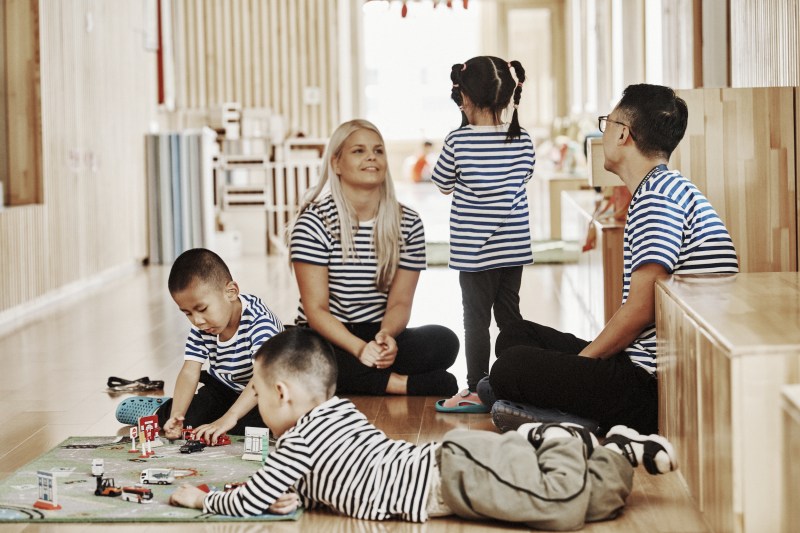
Inclusive environments help children understand that everyone learns in different ways and at different paces. Within a neurodiversity framework, these differences are celebrated as natural variations in how our brain develop and process the world. Some children learn best through movement, some through thoughtful observation, and some by actively talking things through with their peers. Inclusive classrooms make space for all these differences and allow children to see that needing support, asking for help, or approaching a task in a different way are all normal ways of learning.
Inclusion begins with a sense of belonging. Educational research consistently finds that students who feel they belong are more likely to engage in their learning, take academic risks and persevere when tasks become challenging. Children who feel accepted by both teachers and peers are more willing to jump in and try new things and are less afraid of making mistakes.
Schools have traditionally separated mainstream education from Special Educational Needs (SEN). Specialized support is essential, but research increasingly shows that students benefit the most when specialists and classroom teachers work collaboratively, sharing their expertise to support all learners.
By working together, mainstream and SEN programs can proactively reduce barriers and provide multiple pathways to learning. Strategies such as co-teaching, push-in support, targeted small group instruction, and intentional adjustments to the learning environment can allow children with a wide range of strengths and challenges to successfully engage in their learning.
Inclusive classrooms benefit all children, not only those receiving additional support. When children learn alongside peers who think, communicate and act differently, they develop empathy, patience and flexible thinking. These important social and emotional skills are just as important for long-term success as academic knowledge. Ultimately, inclusive education is an investment in the kind of communities we hope to build. Children who feel seen and valued develop confidence in their abilities and openness towards others. When young children grow up in environments where differences are understood and respected, they develop into adults with empathy, confidence and adaptability, the very skills they will need to thrive in a diverse and complex world.
Written by Jayne Nadarajoo